Donation Station for a second-hand shop
Donation Station for a second-hand shop
Donation Station for a second-hand shop
Co-created a physical–digital after-hours donation service with second-hand shop employees through participatory design.
Co-created a physical–digital after-hours donation service with second-hand shop employees through participatory design.
TIMELINE
Nov 2024 – Jan 2025
Nov 2024 – Jan 2025
Client
Artikel 2
Artikel 2
ROLE
UX & Service Designer
UX & Service Designer
TOOLS
Figma
Miro
Pen & Paper
Figma
Miro
Pen & Paper
Participants
6 second-hand shop employees
6 second-hand shop employees

Context
Context
Context
The Donation Station is a service concept co-created with Stockholm-based second-hand chain Artikel 2 through a participatory design project. Employees and shop managers from two stores were involved throughout the design process, from identifying challenges in their daily work to developing and evaluating a solution.
The Donation Station is a service concept co-created with Stockholm-based second-hand chain Artikel 2 through a participatory design project. Employees and shop managers from two stores were involved throughout the design process, from identifying challenges in their daily work to developing and evaluating a solution.
Challenge
Challenge
Challenge
Donated items were often left outside the shops after closing, leading to theft, damage, increased staff workload, and lost revenue.
The challenge was to co-create an after-hours donation process that addressed employees’ needs while making it safer and easier to receive donated items.
Donated items were often left outside the shops after closing, leading to theft, damage, increased staff workload, and lost revenue.
The challenge was to co-create an after-hours donation process that addressed employees’ needs while making it safer and easier to receive donated items.
Project scope
Project scope
Project scope
The participatory design process focused on employee stakeholders. Validating the concept with donors would be an essential next step.
The participatory design process focused on employee stakeholders. Validating the concept with donors would be an essential next step.
My contribution
My contribution
My contribution
I facilitated co-design workshops, conducted interviews and user testing, synthesised qualitative findings and translated participants’ ideas into design decisions and prototypes.
I facilitated co-design workshops, conducted interviews and user testing, synthesised qualitative findings and translated participants’ ideas into design decisions and prototypes.
I facilitated co-design workshops, conducted interviews and user testing, synthesised qualitative findings and translated participants’ ideas into design decisions and prototypes.
Co-design process
Co-design process
Co-design process

Explore
Explore
Explore
Contextual inquiry, interviews and field observations were conducted in the participants’ workplaces to understand their daily routines, environment, use of tools and existing donation process.
The findings were synthesised through affinity diagrams to identify recurring themes and workplace challenges.
Contextual inquiry, interviews and field observations were conducted in the participants’ workplaces to understand their daily routines, environment, use of tools and existing donation process.
The findings were synthesised through affinity diagrams to identify recurring themes and workplace challenges.


The findings were synthesised using Post-it notes and affinity diagrams to identify recurring themes and workplace challenges.
The findings were synthesised using Post-it notes and affinity diagrams to identify recurring themes and workplace challenges.
Define
Define
Define
During a Future Workshop, participants explored challenges in their daily work, generated potential solutions and voted on the ideas they believed would best address their needs. The Donation Station design concept received the most votes and became the focus for further development.
During a Future Workshop, participants explored challenges in their daily work, generated potential solutions and voted on the ideas they believed would best address their needs. The Donation Station design concept received the most votes and became the focus for further development.

Ideate
Ideate
Ideate
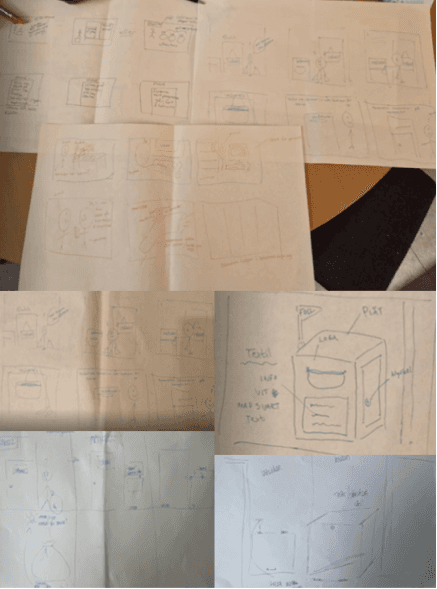
Participants used scenarios, storyboards and sketches to define how the service should work, look and feel. Their ideas were synthesised through affinity diagrams into design directions for the physical station and supporting digital interface.
Participants used scenarios, storyboards and sketches to define how the service should work, look and feel. Their ideas were synthesised through affinity diagrams into design directions for the physical station and supporting digital interface.
Ideas were synthesised using affinity diagrams into design directions for the physical Donation Station and supporting digital interface.
Ideas were synthesised using affinity diagrams into design directions for the physical Donation Station and supporting digital interface.

Prototype & Test
Low-fidelity prototype of the Donation Station

Donation Station digital interface
Prototype & Test
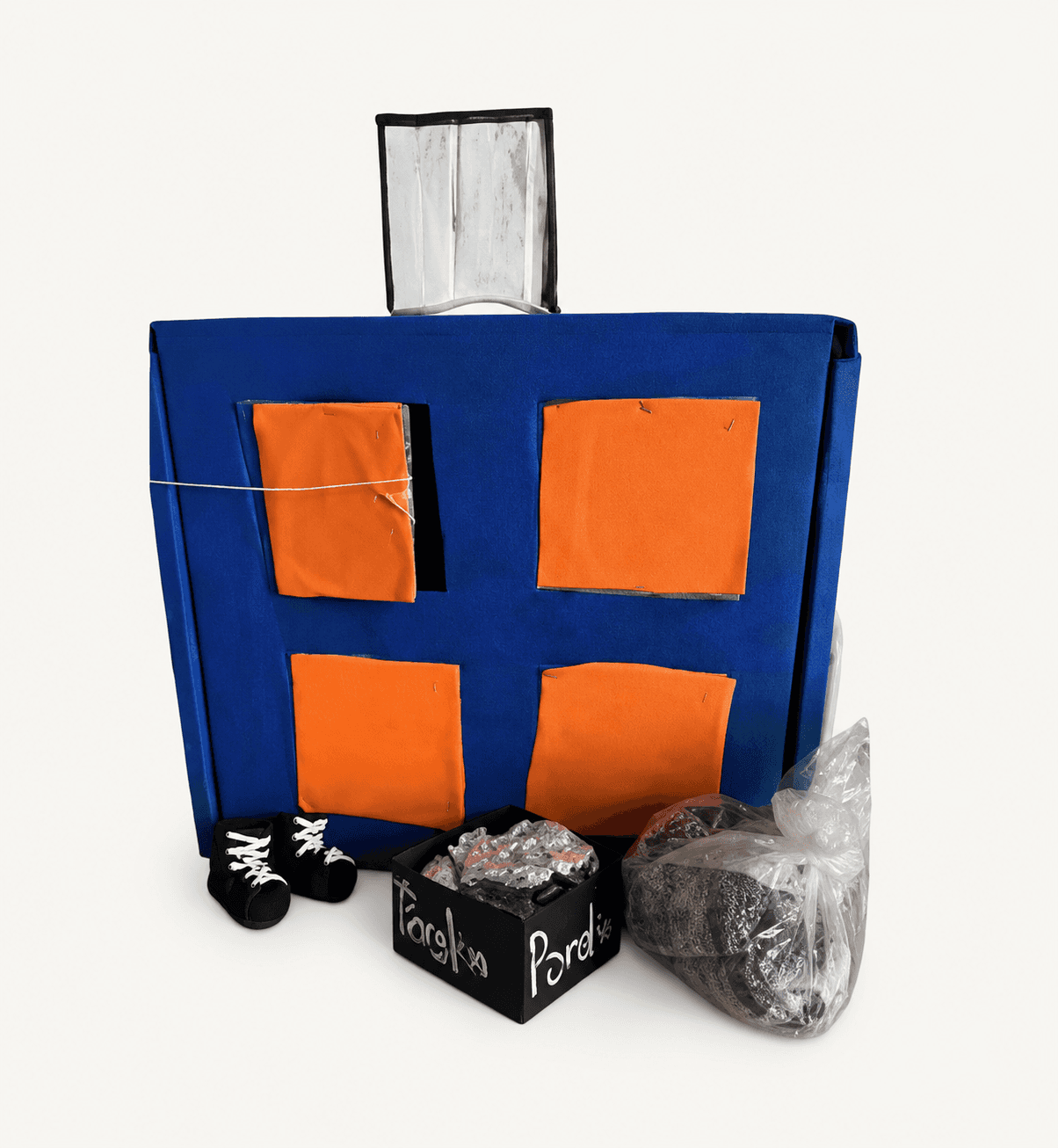
Low-fidelity prototype of the Donation Station
Donation Station digital interface
Prototype & Test
Low-fidelity prototype of the Donation Station
Donation Station digital interface
A low-fidelity physical prototype of the Donation Station and supporting digital interface were developed and evaluated through an end-to-end donation scenario.
Testing explored the concept’s functionality and user experience, as well as whether it addressed the problem identified by employees.
Feedback was predominantly positive. Participants described the concept as better than expected and recognised several elements they had helped shape, reinforcing their sense of involvement and ownership.
A low-fidelity physical prototype of the Donation Station and supporting digital interface were developed and evaluated through an end-to-end donation scenario.
Testing explored the concept’s functionality and user experience, as well as whether it addressed the problem identified by employees.
Feedback was predominantly positive. Participants described the concept as better than expected and recognised several elements they had helped shape, reinforcing their sense of involvement and ownership.
Final solution - Donation Station
Final solution - Donation Station

“I would like to introduce the Donation Station in my store.”
“I would like to introduce the Donation Station in my store.”
“I would like to introduce the Donation Station in my store.”
— Second-hand shop manager, Artikel 2
— Second-hand shop manager,
Artikel 2
— Second-hand shop manager, Artikel 2
Outcome and potential impact
Outcome and potential impact
Outcome and potential impact
The Donation Station was developed in response to a problem identified by second-hand shop employees. The resulting concept combines a secure physical donation station with a supporting digital interface, allowing donors to leave reusable items outside opening hours.
If implemented, the Donation Station could help Artikel 2:
Reduce theft, damage to donations and staff workload.
Increase the number of reusable items received.
Generate additional revenue for social initiatives.
Support reuse and the circular economy.
The Donation Station was developed in response to a problem identified by second-hand shop employees. The resulting concept combines a secure physical donation station with a supporting digital interface, allowing donors to leave reusable items outside opening hours.
If implemented, the Donation Station could help Artikel 2:
Reduce theft, damage to donations and staff workload.
Increase the number of reusable items received.
Generate additional revenue for social initiatives.
Support reuse and the circular economy.
Reflections
Reflections
Reflections
A key next step would be to involve donors, the primary users of the service, to understand their needs, motivations and concerns. I would then iterate on the concept, assess accessibility and security requirements, and validate it in a real shop environment.
A key next step would be to involve donors, the primary users of the service, to understand their needs, motivations and concerns. I would then iterate on the concept, assess accessibility and security requirements, and validate it in a real shop environment.
Back to top
View more projects
View more projects
View more projects


Let’s Connect
Let’s Connect
Let’s Connect
Have a role, project, or design problem in mind?
Have a role, project, or design problem in mind?
Have a role, project, or design problem in mind?
I would be glad to hear about it. Reach me directly or connect through LinkedIn.
I would be glad to hear about it.
Reach me directly or connect through LinkedIn.
© 2026 Amanda Schultz. All rights reserved